
Emotion Dysregulation in Autism

Helping Young People Open Up: The Word Wheel, the River of Life, and the Tree of Life
By Ellie Nolan
Ellie Nolan is a lived experience peer support worker and the designated safeguarding lead for an autism and mental health charity in the West Midlands who are supported by BBC Children in Need.
She uses her own experiences to connect with and support young people, helping them feel understood and less alone. Alongside this, she ensures their safety and wellbeing is always protected.
Understanding and expressing emotions can be difficult for young people, especially when feelings are intense, confusing, or unfamiliar. Many struggle to find the right words or feel unsure about how to open up to others. Creative tools like the word wheel, the river of life and the tree of life offer simple but meaningful ways to explore emotions safely. These approaches do not rely on pressure or direct questioning instead, they give young people space to reflect, create, and communicate in ways that feel more natural and comfortable.
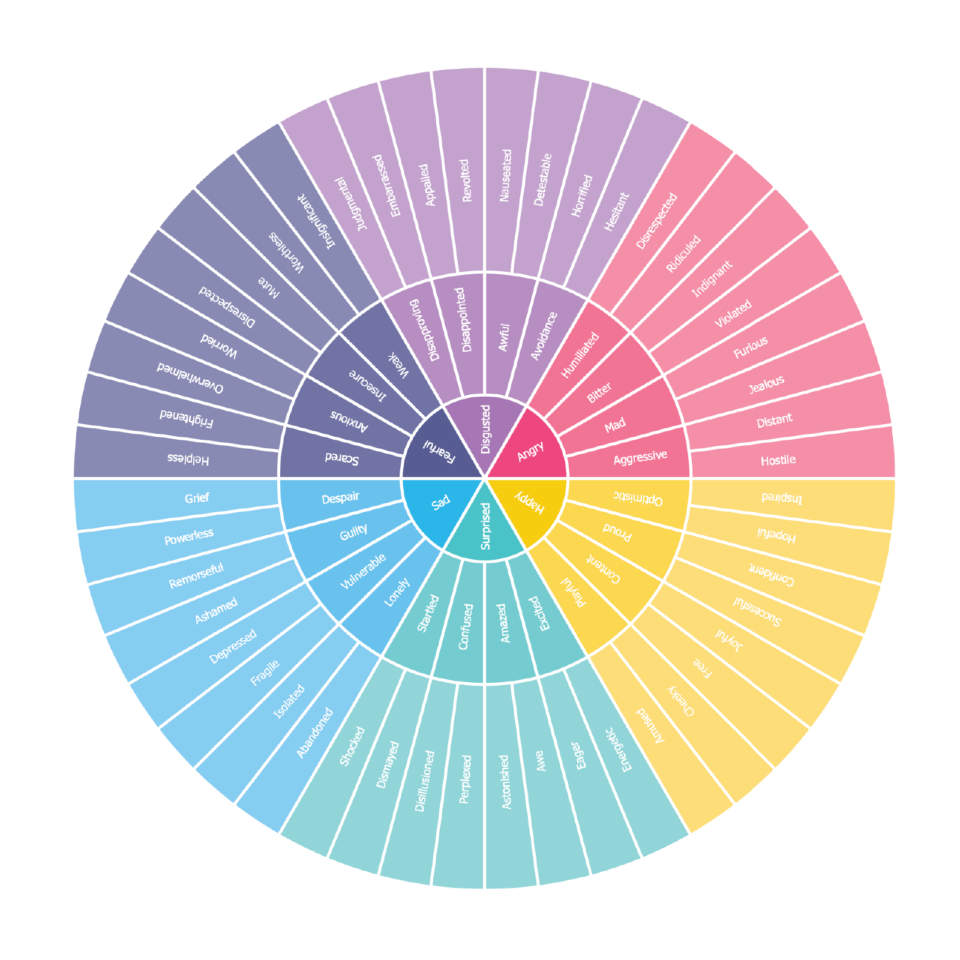
The word wheel is a helpful starting point for emotional expression. Often, young people use very general terms like “fine,” “sad,” or “angry,” which can hide what they are truly feeling. A word wheel breaks emotions down into more specific words, helping them recognise the differences between, for example, feeling “annoyed,” “frustrated,” or “hurt.” This deeper understanding builds emotional awareness and confidence. When young people can clearly name their emotions, it becomes easier for them to explain what is going on inside. This can reduce misunderstandings and encourage more honest conversations with friends, family, or trusted adults.
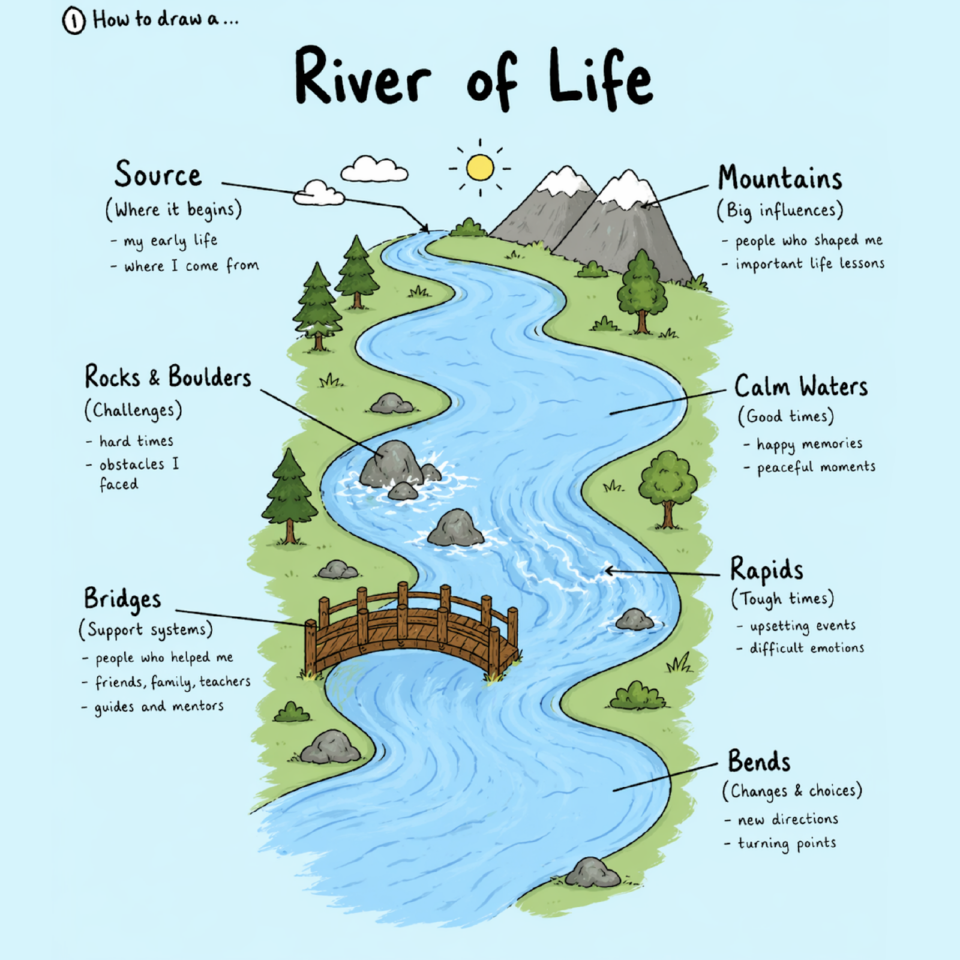
The river of life is a powerful storytelling tool that allows young people to reflect on their life experiences. By imagining their life as a river, they can explore different moments as parts of a journey. Calm waters might stand for happy or peaceful times, while rough rapids could symbolise challenges or difficult emotions. Obstacles in the river, such as rocks or bends, can stand for struggles they have faced, while bridges can represent the support systems that help them get through difficult times such as friends, family, or trusted adults. Drawing or describing their river helps them see that life includes both difficulties, and that difficult moments are not permanent. This method can make it easier to talk about personal experiences, as it creates a sense of distance and safety young people are not just talking about themselves directly, but about their “river.”
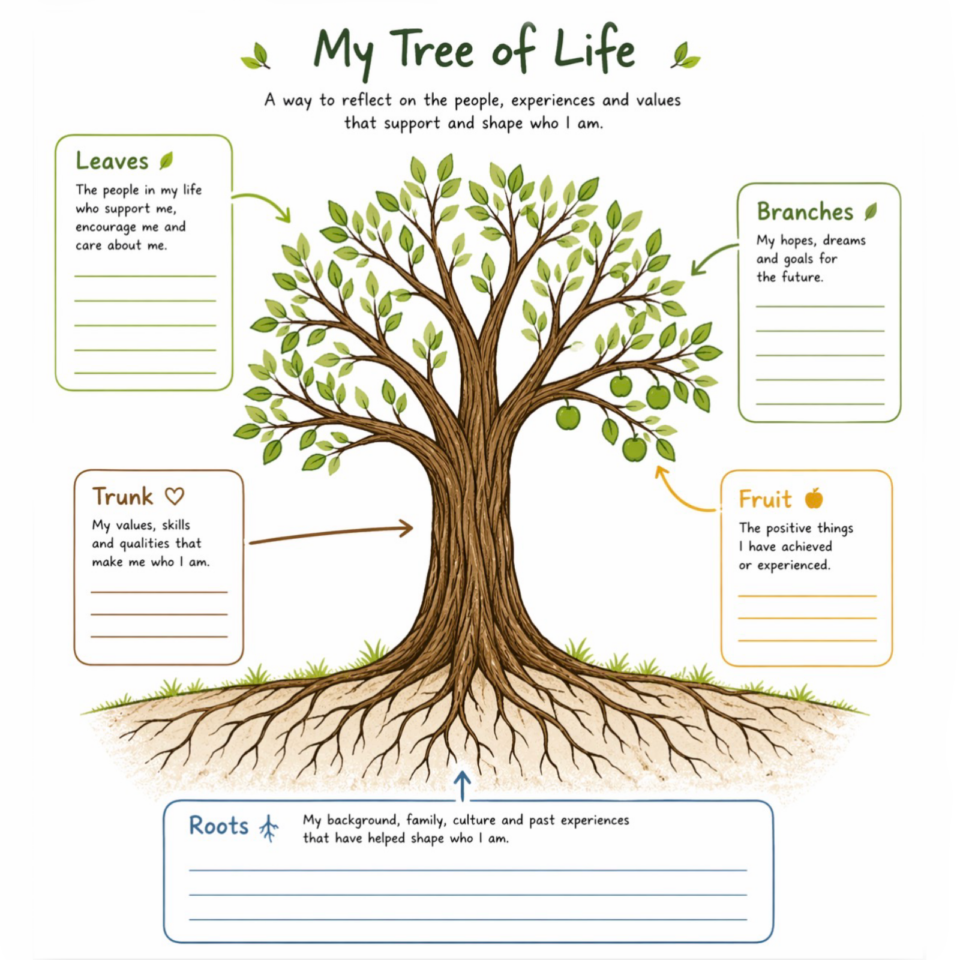
The tree of life focuses on identity, strengths, and connections. In this activity, each part of the tree represents something meaningful. The roots can show where a young person comes from, including family, culture, or important memories. The trunk represents their strengths and qualities, while the branches reflect their goals and dreams and leaves might symbolise important people in their lives. By building their own tree, young people are encouraged to recognise their value and resilience. This can be especially helpful for those who struggle with confidence or feel defined by their difficulties. Sharing their tree with others can also open up conversations in a positive and supportive way.
Together, these tools provide different pathways for emotional expression. They help young people move from confusion to clarity, from silence to communication, and from self-doubt to self-understanding. By using creative and reflective approaches, adults can support young people in opening up at their own pace, creating a safe environment where they feel heard, understood, and valued.