‘Lead the Change’ – Young People building Stronger Communities.
– A blog by Fozia Irfan, Interim Chief Officer for Children and Families
Despite all the talk of division, alienation and polarisation, young people today want what every generation has wanted: to feel safe, to feel hopeful, to feel connected – and to feel like their future matters.
And when More in Common shared their latest conversations with 13–18 year olds from across the UK – from cities, suburbs, rural towns, different ethnicities, religions, backgrounds – it was striking how remarkably aligned their experiences actually are.
The challenges young people are facing are real – and they’re growing
Four things shaped almost every conversation:

The cost-of-living crisis
It’s affecting young people directly – not just their families. They’re cutting back on travel, activities, socialising. Some simply can’t afford to leave their postcode.

A lack of real, safe places to go
Youth clubs have closed, community spaces are shrinking, and public areas don’t always feel safe or welcoming. Many teenagers feel pushed out of the very communities they’re meant to belong to.

Concerns about personal safety
Whether it’s violence on the streets, harassment, or tensions that flare during moments of unrest, young people feel vulnerable in a way that’s immediate and deeply personal.

The overwhelming nature of online life
Because physical spaces are lacking, many young people are spending more time online even though they don’t necessarily want to. Social media can amplify division, fuels misinformation, and, for many from minoritised ethnic groups, exposes them to racialised or abusive language.
These aren’t small issues. They shape how young people see their communities, their peers, and what they think Britain is becoming.
Young people’s views on identity and division are more complex than we assume
What really struck me was the nuance:
- Young people from minoritised ethnic groups talked about racism online and how it affects their sense of belonging – especially their relationship to British identity.
- Some young people framed migration and integration as the main sources of community tension.
- But across every group, violence was firmly rejected. They may disagree on the causes of division, but they agree that destruction never leads to solutions.
This isn’t a generation that’s apathetic or extreme. It’s a generation trying to make sense of a very messy world with limited tools and even fewer safe spaces to do it.
What they’re asking for is simple.
When we look past the headlines, young people are asking us to focus on the basics:
- Make us feel safe – online, offline, and on the way to the places we go.
- Invest in our futures –real pathways into jobs, training, skills and networks.
- Create belonging across differences – give us meaningful ways to meet people unlike ourselves.
- Give us real spaces to be young – safe, well‑kept, affordable spaces where we can gather, talk, and be ourselves.
- Don’t assume everything has to be digital – we crave connection in real life.
And today, funders are stepping up: introducing Lead the Change
This is why I’m genuinely proud of what’s happening today. Over the last 12 months, BBC Children in Need has been listening to the sector, convening webinars and forming a strong collaboration of funders, focussed on supporting young people most impacted by communities experiencing polarisation and division.
BBC Children in Need, Co‑op Foundation, Esmée Fairbairn Foundation, Henry Smith Foundation, Joseph Levy Foundation, Paul Hamlyn Foundation, Postcode Justice Trust,UK Community Foundations and The National Lottery Community Fund have come together to launch Lead the Change: a £3.4 million, programme giving young people the tools – and the power – to strengthen their own communities.
Lead the Change will:
- Create safe physical spaces for young people to meet and connect
- Build their leadership, confidence and community-organising skills
- Help them challenge misinformation and harmful narratives
- Support community-led projects shaped directly by young people
This is about more than grant-making, it is about investing in young people to decide themselves how they wish to tackle issues of polarisation and division in their local communities. A key element is convening these young people from across the UK to form a community of practice and provide peer support. The final part is to focus their efforts on building narrative change.
In this work, we have been supported by a brilliant advisory group from experts in contextual safeguarding to frontline youth workers, who have helped us to shape and develop the programme, directly responding to their recommendations.
This moment matters
Because when young people say they feel unsafe, unheard or disconnected, we can’t respond with more reports or more commentary.
We have to respond with spaces, opportunity, trust and investment and programmes that reflect their lived realities, not our assumptions.
Why a Place-Based Approach?
Place-based working brings together local authorities, schools, health services, voluntary organisations, and residents to create collective solutions that are rooted in local knowledge and relationships. It is a method that responds to the specific needs of individual communities and empowers them to take ownership of the solutions, making interventions more sustainable and impactful.
Those closest to the issue often understand it best. Local residents, frontline workers, and community leaders have first-hand lived experience and knowledge of the specific challenges that their own communities face, from housing and employment to gaps in education and health services. By involving the community, we wish to impact in the design and delivery of solutions, interventions become more relevant, trusted, and responsive. Empowerment also builds local capacity and resilience, enabling communities to drive long-term change rather than relying solely on external support.
When people feel ownership over the decisions that affect their lives, they are more likely to engage, collaborate, and sustain momentum. Ultimately, tackling child poverty requires more than top-down policy, it needs grassroots leadership and community-led action rooted in lived experience.
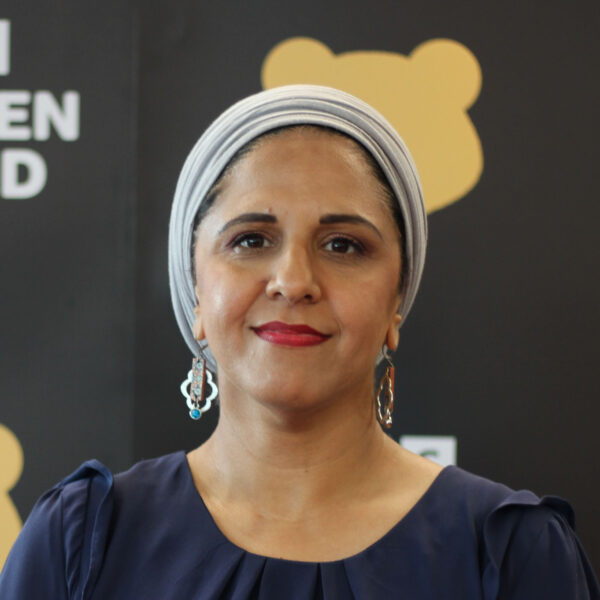
Fozia Irfan
Interim Chief Officer for Children and Families